Lipids and Cellular Wellness
Understanding the biochemical roles of dietary fats in cellular function, energy storage, and metabolic health.
Understanding the biochemical roles of dietary fats in cellular function, energy storage, and metabolic health.
Lipids are diverse organic molecules with limited water solubility, including triglycerides (storage fats), phospholipids (membrane components), cholesterol (steroid precursor), and fat-soluble vitamins (A, D, E, K). Their structural variety creates vastly different physiological effects.
Unlike the singular glucose or the twenty amino acids, lipid chemistry encompasses hundreds of distinct molecules with distinct metabolic fates. Understanding lipid nutrition requires moving beyond singular "fat" categories and recognizing biochemical specificity. A triglyceride composed of saturated fatty acids behaves differently from one containing polyunsaturated fatty acids; both differ from cholesterol or phospholipids.
Fatty acids are long-chain carboxylic acids distinguished by chain length, degree of saturation, and position of double bonds. This structural distinction has profound metabolic implications.
Saturated Fatty Acids lack double bonds, making them rigid and prone to crystallization. They increase LDL cholesterol and raise cardiovascular disease risk at elevated intake.
Monounsaturated Fatty Acids contain one double bond, improving fluidity. They show neutral or favorable metabolic effects and may support cardiovascular health.
Polyunsaturated Fatty Acids contain multiple double bonds, including essential omega-3 and omega-6 fatty acids. These support inflammation resolution, neurological function, and membrane fluidity but cannot be synthesized by human metabolism.
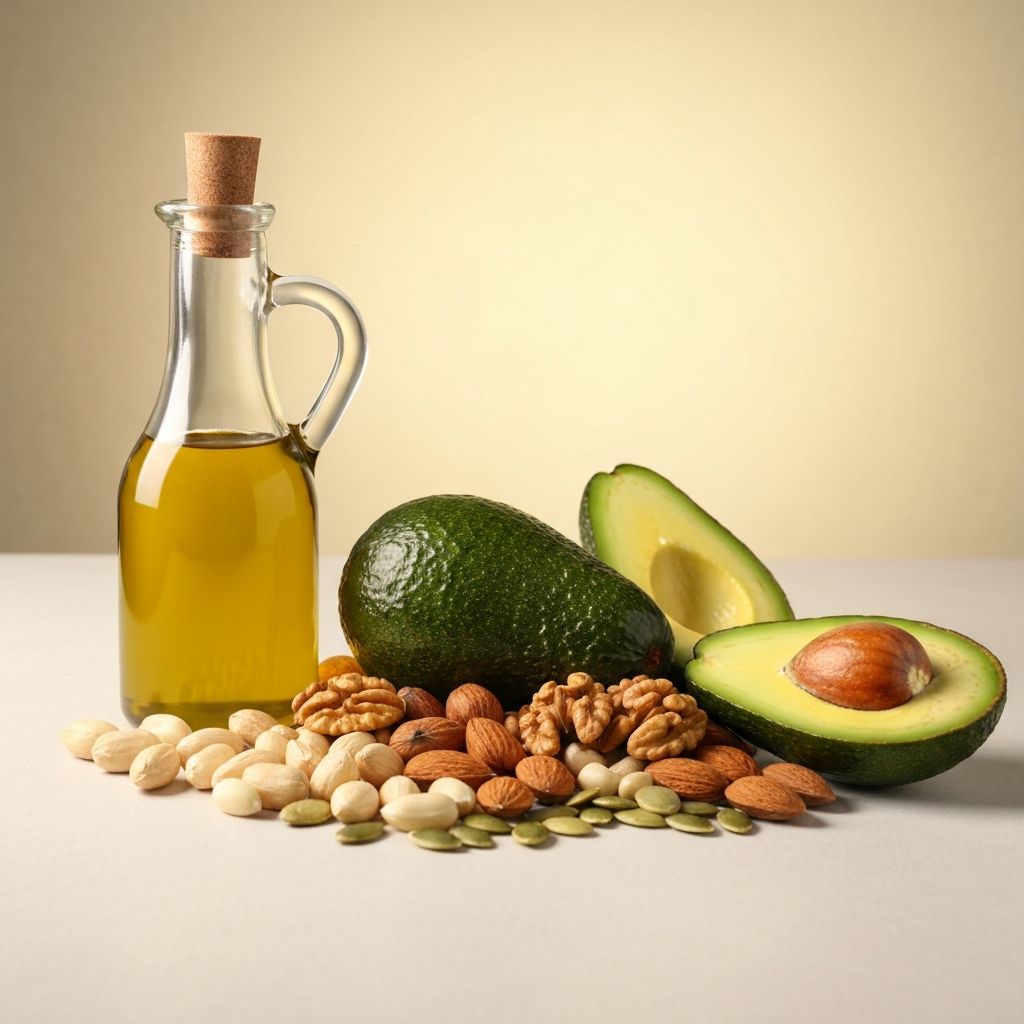
Phospholipids form cell membrane bilayers. Fatty acid composition influences membrane fluidity, receptor function, and cellular signaling capacity.
Triglycerides store energy more efficiently than carbohydrates (9 calories per gram versus 4). Dietary fat supports energy intake in calorically dense form.
Cholesterol serves as precursor for steroid hormones (testosterone, estrogen, cortisol) and vitamin D. Adequate lipid intake supports endocrine function.
Vitamins A, D, E, and K require lipid presence in the digestive tract for absorption. Dietary fat facilitates absorption of these micronutrients.
Dietary lipids are emulsified by bile salts in the small intestine, enabling pancreatic lipase access. Monoglycerides and fatty acids are absorbed into intestinal epithelial cells, where they are re-esterified into triglycerides and packaged into chylomicrons for transport via lymph.
Lipid absorption efficiency varies with fat solubility, food matrix, digestive health, and bile acid availability. Fat malabsorption—from bile insufficiency, pancreatic insufficiency, or intestinal disease—impairs both energy and micronutrient absorption.
In circulation, lipoproteins (chylomicrons, VLDL, LDL, HDL) transport lipids. Lipoprotein composition and subclass distribution influence cardiovascular disease risk, independent of total cholesterol levels.
Energy density of dietary fats
Polyunsaturated fatty acids humans cannot synthesize (omega-3 and omega-6)
Typical daily cholesterol synthesis in absence of dietary intake
Beta-Oxidation: Fatty acids undergo sequential two-carbon removal, producing acetyl-CoA for energy production. This process becomes prominent during fasting or carbohydrate restriction.
Ketone Production: During prolonged fasting, hepatic acetyl-CoA accumulation exceeds oxidative capacity, creating ketone bodies (acetoacetate, beta-hydroxybutyrate) that serve as alternative fuel for brain and heart.
De Novo Lipogenesis: Dietary carbohydrate and protein excess can be converted to fatty acids. This process occurs primarily in liver and adipose tissue, creating storage lipids from dietary macronutrient surplus.
Fatty acid composition influences inflammation signaling. Omega-3 polyunsaturated fatty acids and their metabolites (EPA, DHA) promote inflammation resolution and dampen excessive inflammatory responses. Omega-6 fatty acids, in excess relative to omega-3, may promote pro-inflammatory signaling.
Modern Western diets provide elevated omega-6 to omega-3 ratios (15:1 to 20:1 versus ancestral ratios of 1:1 to 4:1). This imbalance may contribute to systemic inflammation. Increasing omega-3 sources (fatty fish, flaxseeds, walnuts) or reducing omega-6 seed oils may help restore more favorable ratios.